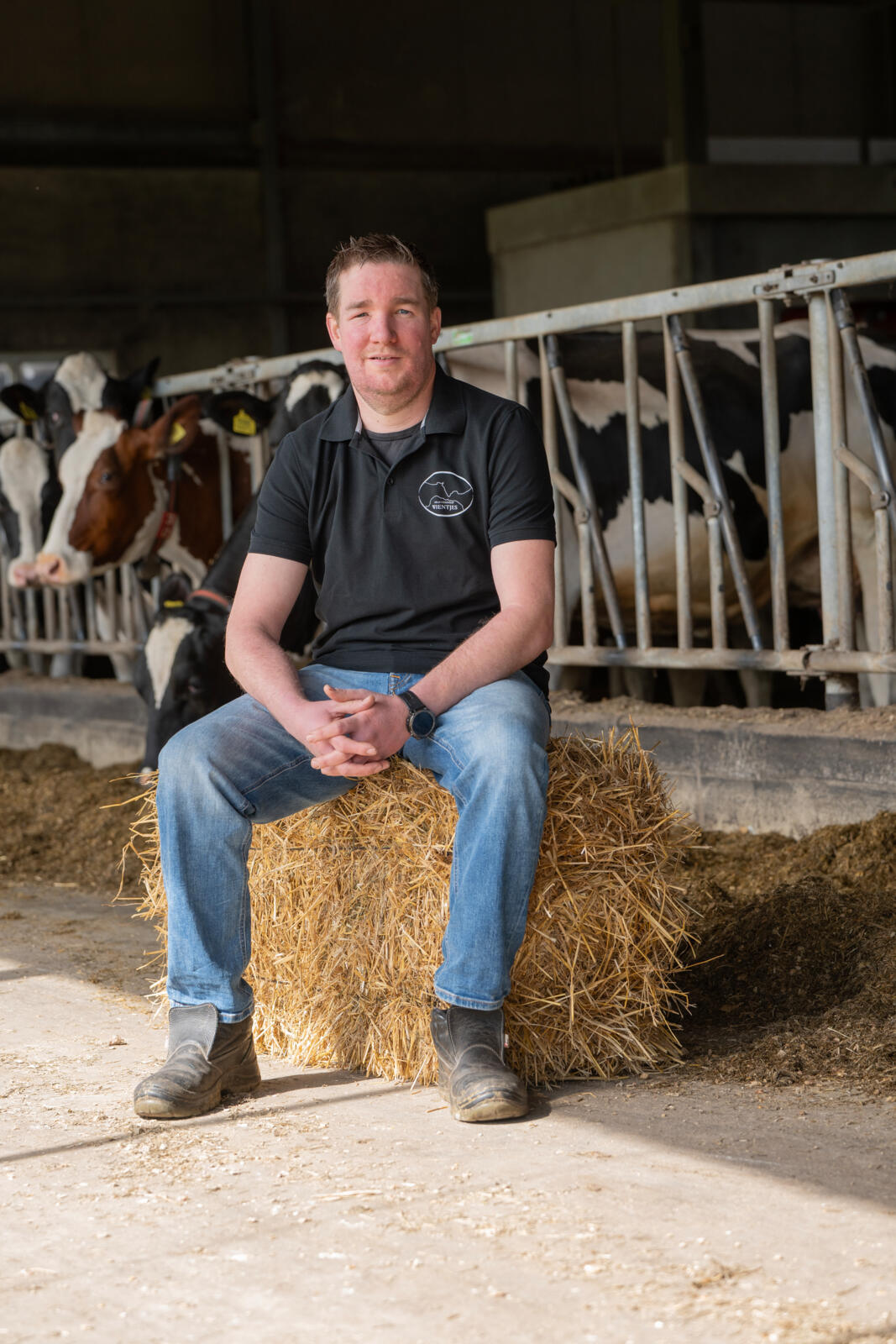
“Achieving high and efficient milk production is like putting together a puzzle. The result is only complete when all the pieces fit together,” says Rob Wientjes. His cows currently produce an average of 40 kg of milk per day with around 4.35% fat and 3.60% protein. With 130 cows and two milking robots, he produces more than 1.6 million kilograms of milk annually.
The fact that the cows produce a lot of milk is nice, but it is not an end in itself, the farmer emphasizes. “A few years ago, I would not have thought this possible. I do everything I can to keep the cows healthy, provide optimal comfort, and feed a balanced ration with plenty oftop-quality forage. “When all these factors come together and the cows have the genetic potential, high production follows naturally,” he explains. According to Wientjes, breeding is an essential piece of the puzzle. Production and efficiency traits therefore carry significant weight in his breeding goal. “But a cow also needs strong legs and sound conformation to sustain high production over a long period. Good genetic potential for health traits is just as important,” he stresses.
Making breeding choices means working on the future
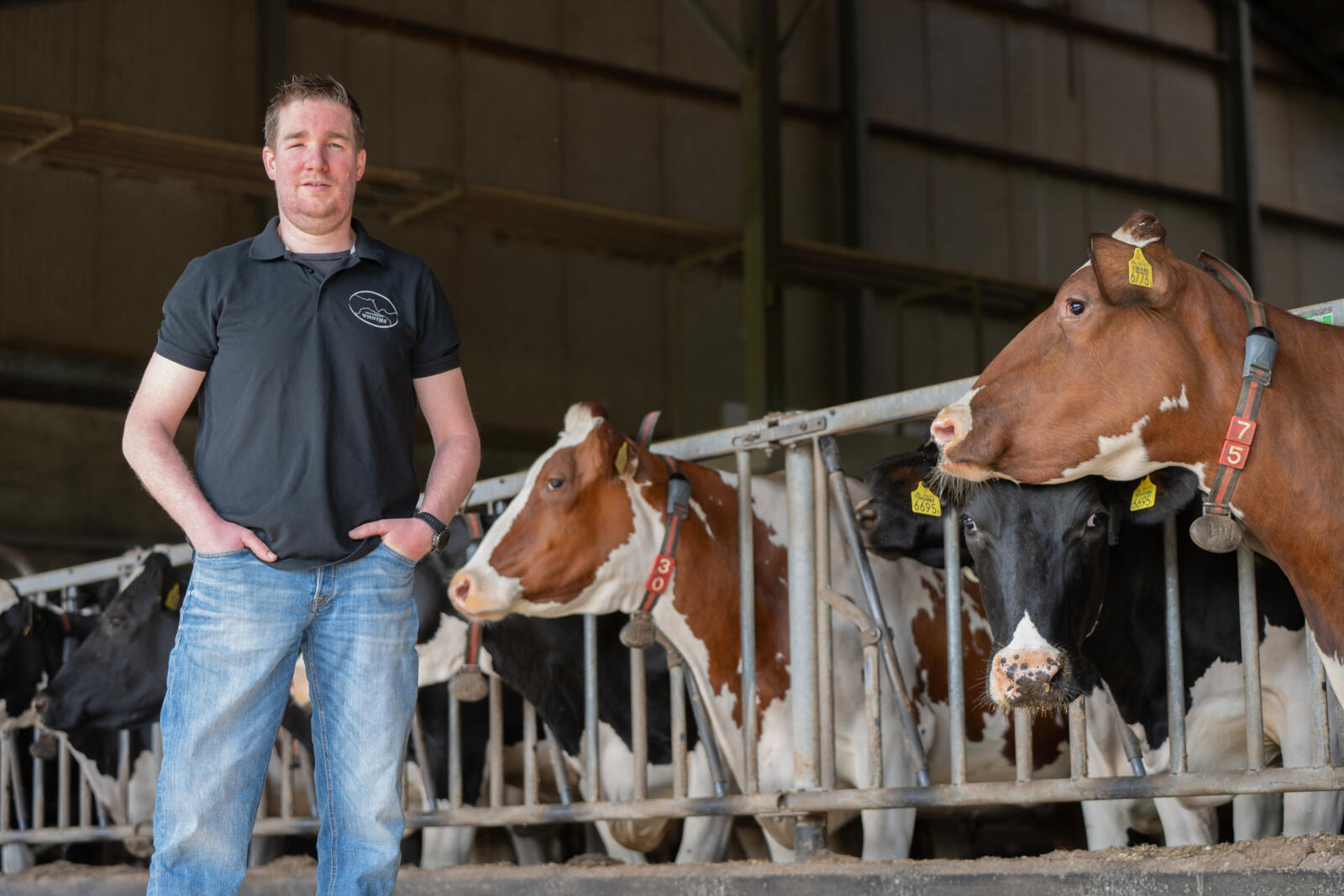
“The results of breeding only become visible in the long term,” says Dutch dairy farmer Rob Wientjes from Sint Anthonis. That is why, according to him, it is important to already think about traits that will become important in the future. Low greenhouse gas emissions per kilogram of milk is one such trait.
Breeding is one piece of the puzzle
Breeding for the long term
“The effects of breeding decisions you make today only become visible in the long run,” the farmer notes. That is why he believes it is important to think ahead about traits that will matter in the future. “Low greenhouse gas emissions per kilogram of milk is one of those traits. Dairy processors are already focusing on this, and it will only become more important in the future,” he expects. Rob finds it interesting that there are genetic differences between cows in the emission of the potent greenhouse gas methane.“ But it is not something I focus on blindly. Efficient conversion of feed into milk and high lifetime production are at least asimportant for achieving low greenhouse gas emissions perkilogram of milk,” he explains.“ These traits therefore form the main focus in my breeding goal.But now that breeding values for methane reduction are available,I can already eliminate bulls that score poorly on this trait. And if I have to choose between three bulls that are otherwise comparable, I choose the bull with the highest breeding value for methane reduction,” he says.
Fine-tuning with the methane reduction breeding value
Rob Wientjes supplies his milk to FrieslandCampina. “My milk buyer rewards lower greenhouse gas emissions per kilogram of milk, and that motivates me to work on this,” he explains. “I have already learned quite a lot about which management factors I can influence to improve my score. Breeding is one of those factors. And the methane reduction breeding value is a tool for finetuning.”
Reducing methane per kilogram of milk with the methane reduction breeding value
Cows with the same production level can differ in methane emissions. These differences are largely determined by genetics. This makes it possible to breed for lower methane emissions per kilogram of milk. CRV’s methane reduction breeding value represents the amount of methane a cow produces per day, independent of her milk production. By breeding for methane reduction, milk production remains stable or may even increase, while methane emissions per cow per day decrease. This results in fewer grams of methane per kilogram of milk.
Do you want more information about Methane? Here you can find more information: Methane - CRV