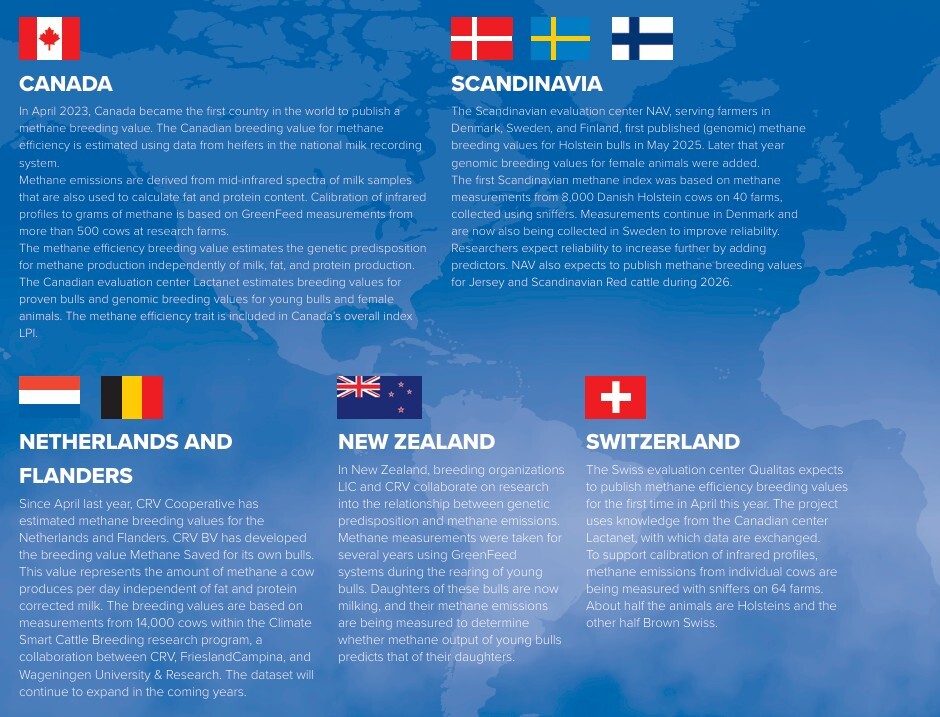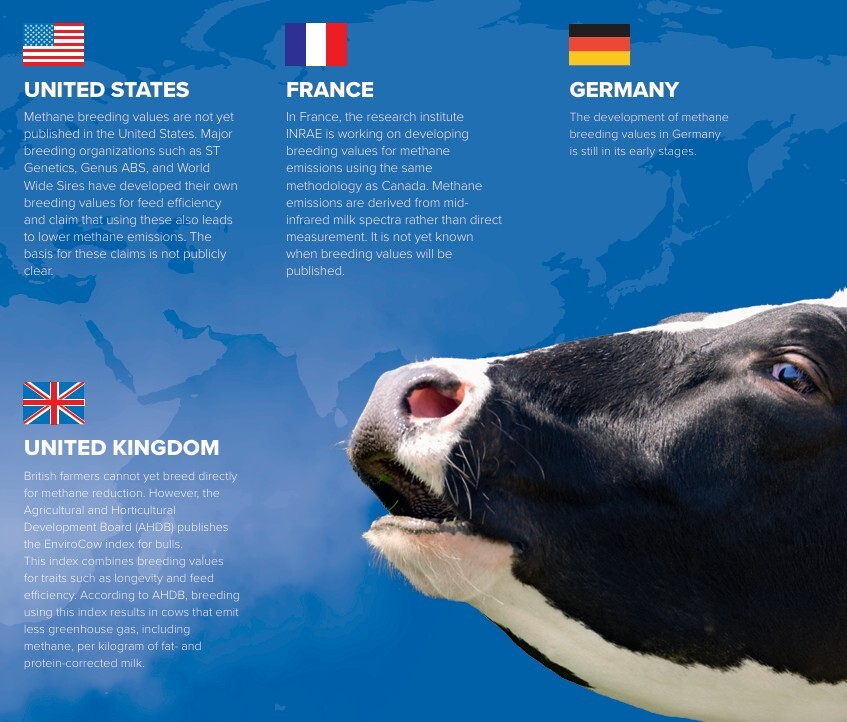
It may not seem like much. By including methane in the breeding goal for dairy cows, emissions of this greenhouse gas can be reduced by about one percent per year. In the short term, the effect of feed additives or ration adjustments is much greater.“ But with breeding you permanently fix the genetic predisposition for lower methane emissions, and the effect accumulates from one generation of cows to the next. In this way, breeding could achieve a permanent reduction of more than twenty percent by 2050,” explains Anouk van Breukelen from the Animal Breeding and Genomics group at Wageningen University & Research. She obtained her PhD through a major project that forms the basis of the methane breeding values currently estimated in the Netherlands, and she continues to work on several follow-up studies. “Breeding is also a relatively inexpensive way to reduce methane emissions,” the scientist adds. “Developing breeding values requires an investment, but after that the costs of application are limited. Compare that with feed additives, which must be purchased repeatedly and whose effect stops immediately once feeding stops.”
Breeding for methane reduction gaining momentum worldwide
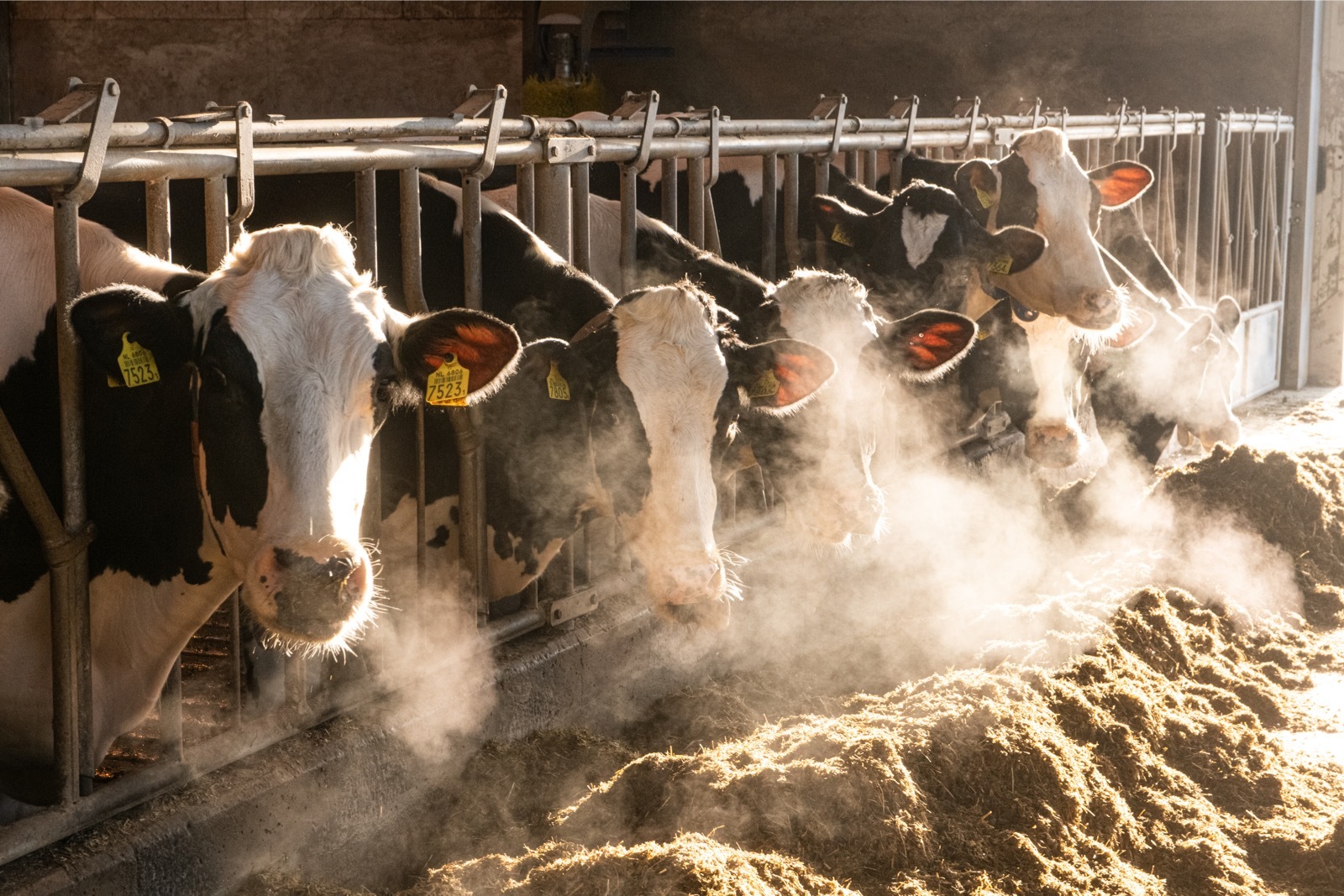
With a heritability of around 20 percent, methane production is a trait that can be successfully improved through breeding. Internationally, extensive research is being conducted into the relationship between genetic predisposition and the production of this powerful greenhouse gas. However, the potential of breeding for lower methane emissions will only be fully realized if farmers receive a financial reward for their efforts.
Breeding cows for lower methane emissions
One percent less methane per year
It is therefore not surprising that millions are being invested worldwide in research into the possibilities of reducing methane With a heritability of around 20 percent, methane production is a trait that can be successfully improved through breeding. Internationally, extensive research is being conducted into the relationship between genetic predisposition and the production of this powerful greenhouse gas. However, the potential of breeding for lower methane emissions will only be fully realized if farmers receive a financial reward for their efforts emissions from livestock through breeding. Methane is about 28 times more potent than CO₂ as a greenhouse gas, and livestock farming, mainly through methane, is responsible for roughly seven percent of global greenhouse gas emissions. The Netherlands is one of the front-runners in research on methane reduction through breeding. However, dozens of research programs are now underway worldwide involving dairy cattle, beef cattle, and sheep. For example, the Animal Breeding and Genomics group coordinates the large international research project Global Methane Genetics.“In recent years we have gathered a lot of knowledge about the relationship between genetic predisposition and methane emissions,” says Van Breukelen. “We now know that the heritability of methane emissions is about 20 percent, and that with a balanced breeding goal, where methane is included, it is possible to reduce emissions by one percent per year without compromising other important traits.”
New: research into the microbiome
At the same time, according to Van Breukelen, there is still much to discover about the relationship between genetic predisposition and methane emissions. For example, methane data collection continues to further increase the reliability of breeding values. “In addition, more research is being carried out into the genetic relationship between methane emissions and production traits,”
she explains. “Some studies show that a higher genetic predisposition for milk fat production is associated with an
undesirable higher genetic predisposition for methane production. However, this relationship is not yet very clear.” A higher genetic predisposition for feed efficiency also appears to be associated with a favorable genetic predisposition for methane emissions. “But we would still like to know much more about this as well.” According to Van Breukelen, there is also still a lot unknown about the combined effects of breeding and dietary adjustments or feed additives on methane emissions. “It would be ideal if the effects could simply be added together. But it is also quite possible that these measures influence each other. We still know very little about this,” she acknowledges. A relatively new area of methane research focuses on microbiomes. Every ruminant has a unique collection of microorganisms in the rumen that break down feed. The composition of this microbiome influences methane formation and depends partly on the animal’s diet and environment. “But the composition of the microbiome is also partly genetically determined,” the researcher explains. “This means that through selection and breeding we may also influence the microbiome of the next generation. We may already capture part of this effect when we breed directly for lower methane emissions, but focusing specifically on the microbiome could allow us to make additional progress.”
Wageningen University & Research coordinates global methane genetics
The Animal Breeding and Genomics group at Wageningen University & Research coordinates the international project Global Methane Genetics, which brings together research on the relationship between genetic predisposition and methane emissions in ruminants. The project involves more than fifty partners across 25 countries and includes a wide range of dairy cattle, beef cattle, and sheep breeds. The total research budget exceeds 27 million dollars, largely funded by philanthropic organizations such as the Bezos Earth Fund. “A key requirement from the funders is that knowledge and data are shared openly. There is a lot to gain from that,” says project leader Roel Veerkamp from Wageningen University & Research.“By combining and exchanging knowledge and data we can accelerate breeding for methane reduction worldwide,” explains the professor of Animal Breeding and Genomics.“For example, we share knowledge about measurement protocols, research methods, and breeding value estimation. We are also working on an international database to record methane emissions and DNA data from about 110,000 cattle and sheep, as well as microbiome information from around 20,000 animals,” he explains.“This will improve the reliability of methane breeding values and increase the effectiveness of breeding for lower methane emissions.”